
Our Windsock Collection
Our Windsock Range
-
Piggotts Snap-on Windsock
Regular price From £62.77Regular priceUnit price per -
Piggotts Lace-on Windsock
Regular price From £27.00Regular priceUnit price per -
Windsock Pole Swivel Arm System
Regular price £205.00Regular priceUnit price per -
Wall Mounted Windsock Poles
Regular price From £404.72Regular priceUnit price per


Industries We Supply
-

Aviation
Explore aviation windsocksFrom private airstrips to licensed aerodromes, accurate wind direction is a flight safety requirement, not a preference. Our windsocks meet the ICAO Annex 14 specification referenced by CAA CAP 168, available in the 12ft aerodrome-standard size with illuminated options for night operations. UK-made, in stock, with compliance documentation available on request.
-

Heliports & Helipads
Explore heliport windsocksEvery helicopter landing area needs a windsock that pilots can read on approach, in any light. We supply onshore helipad windsocks to CAP 168 and ICAO Annex 14 Volume II standards, with illuminated options for night operations and specialist advice on offshore helideck specifications to CAP 437.
-

Oil & Gas
Explore oil and gas windsocksOnshore facilities and offshore platforms have different requirements, but both need wind direction indicators that work when they are needed most. We supply COMAH site windsocks for onshore oil and gas operations and advise on offshore helideck specifications to CAP 437, with ATEX-rated illuminated options for classified electrical zones.
-

Energy from Waste
Explore EfW windsocksMost EfW plants operate under COMAH Regulations or Environment Agency permit conditions that require a permanently installed, continuously visible wind direction indicator as part of the site emergency plan. We supply robust industrial windsocks built for large-footprint sites that run around the clock.
-

Chemical Processing
Explore chemical processing windsocksAt least one windsock is required as part of emergency planning at any COMAH-regulated chemical site, and many Environment Agency pollution prevention licences include the requirement as a standard condition. We manufacture to the specification your safety report and HSE inspector expect to see.
-

Ports & Marine Construction
Explore port and marine windsocksSalt, high winds and 24-hour operations make ports and marine construction sites among the toughest environments for windsock fabric. We supply heavy-duty coastal-specification windsocks with stainless steel fittings, sized to be read from crane cabs, wheelhouses and site welfare points across large operational areas.
-

Waste & Recycling
Explore waste and recycling windsocksWind direction indicators are a standard condition on most Environment Agency environmental permits for waste facilities, and a practical necessity on any site with a fire or hazardous release risk. We supply robust windsocks suited to the dust, contamination and variable conditions typical of waste and recycling operations.
-

Water Treatment
Explore water treatment windsocksChlorine and other treatment chemicals create directional hazards in an unplanned release. COMAH-regulated water treatment works are required to address wind direction monitoring in their emergency response plans, and many sites carry an Environment Agency permit condition requiring a permanently displayed indicator.
-

MOD & Defence
Explore MOD and defence windsocksUK military aerodromes are regulated by the Military Aviation Authority to standards broadly aligned with ICAO Annex 14, and wind direction indicators are part of every Defence Aerodrome Manual. We are a UK manufacturer with experience of regulated and public sector supply, and we hold stock in standard aerodrome sizes with full procurement documentation available.


-

Visibility
Read moreWindsocks are typically made from UV-resistant and weather-resistant fabric to ensure durability in outdoor conditions. They are designed in bright, contrasting colours, such as orange or red with white stripes, to maximise visibility from a distance.
-
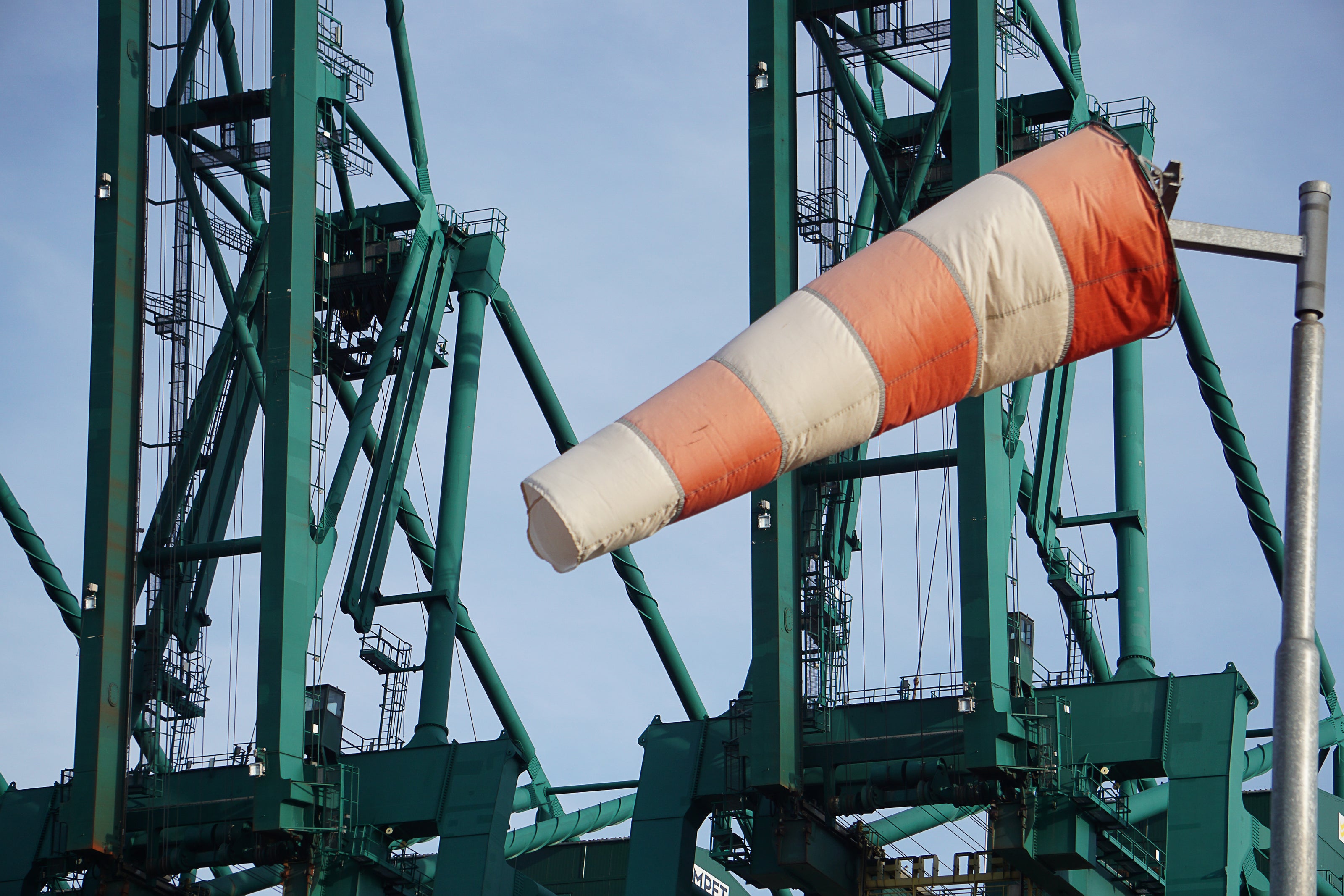
Wind Response
Read moreA windsock must be lightweight and move freely to show wind direction and speed. It should start to extend at 3 knots (5.6 km/h) and be fully extended at 15 knots (28 km/h), giving a clear visual cue of wind conditions.
-

Windsock Size
Read moreFor aviation, windsocks are typically 8 to 12 feet (2.4 to 3.7 metres) long, with an opening diameter of about 18 inches (45 cm) or more. Smaller sizes may be used for non-aviation purposes where less visibility is required.
-

Windsock Mounting
Read moreA windsock should be mounted on a pivoting frame or swivel mechanism to rotate freely with the wind. It must be placed on a pole tall enough, typically 10 to 15 feet or more, to keep it clear of obstructions and ensure accurate wind readings.
-

Illuminating Your Windsock
Read moreIf used at night, such as at airports, a windsock must be properly illuminated, usually from above, to ensure it remains visible and functional in low-light conditions.
-

Compliance
Read moreFor aviation purposes, windsocks must comply with standards set by the ICAO (International Civil Aviation Organization) or the CAA (Civil Aviation Authority) to ensure accuracy, visibility, and safety.


Blog posts
View all-

Nylon vs Polyester Windsock Fabric: Which Do Yo...
For sheltered inland sites with light wind loads, nylon is the better choice: lighter, more responsive in gentle breezes, and sufficient for the conditions. For exposed, coastal, offshore, aerodrome or...
Nylon vs Polyester Windsock Fabric: Which Do Yo...
For sheltered inland sites with light wind loads, nylon is the better choice: lighter, more responsive in gentle breezes, and sufficient for the conditions. For exposed, coastal, offshore, aerodrome or...
-

How to Site a Windsock: Position, Height and Co...
The most common windsock installation mistake in the UK is putting the sock too close to a building, bund or structure. A windsock in turbulent air does not report the...
How to Site a Windsock: Position, Height and Co...
The most common windsock installation mistake in the UK is putting the sock too close to a building, bund or structure. A windsock in turbulent air does not report the...
-

Windsocks for Ports, Harbours and Marine Constr...
Wind is the most significant uncontrolled variable in port and marine construction operations. It drives crane operating limits, affects vessel berthing decisions, governs the deployment of floating plant and determines...
Windsocks for Ports, Harbours and Marine Constr...
Wind is the most significant uncontrolled variable in port and marine construction operations. It drives crane operating limits, affects vessel berthing decisions, governs the deployment of floating plant and determines...


